
Every move to a new high has someone buying the top.
The question isn't only how much was bought. It's who bought it.
Here's how to read it on the footprint, how to trade it, and how to get a script to alert you when it happens on Hyperliquid.
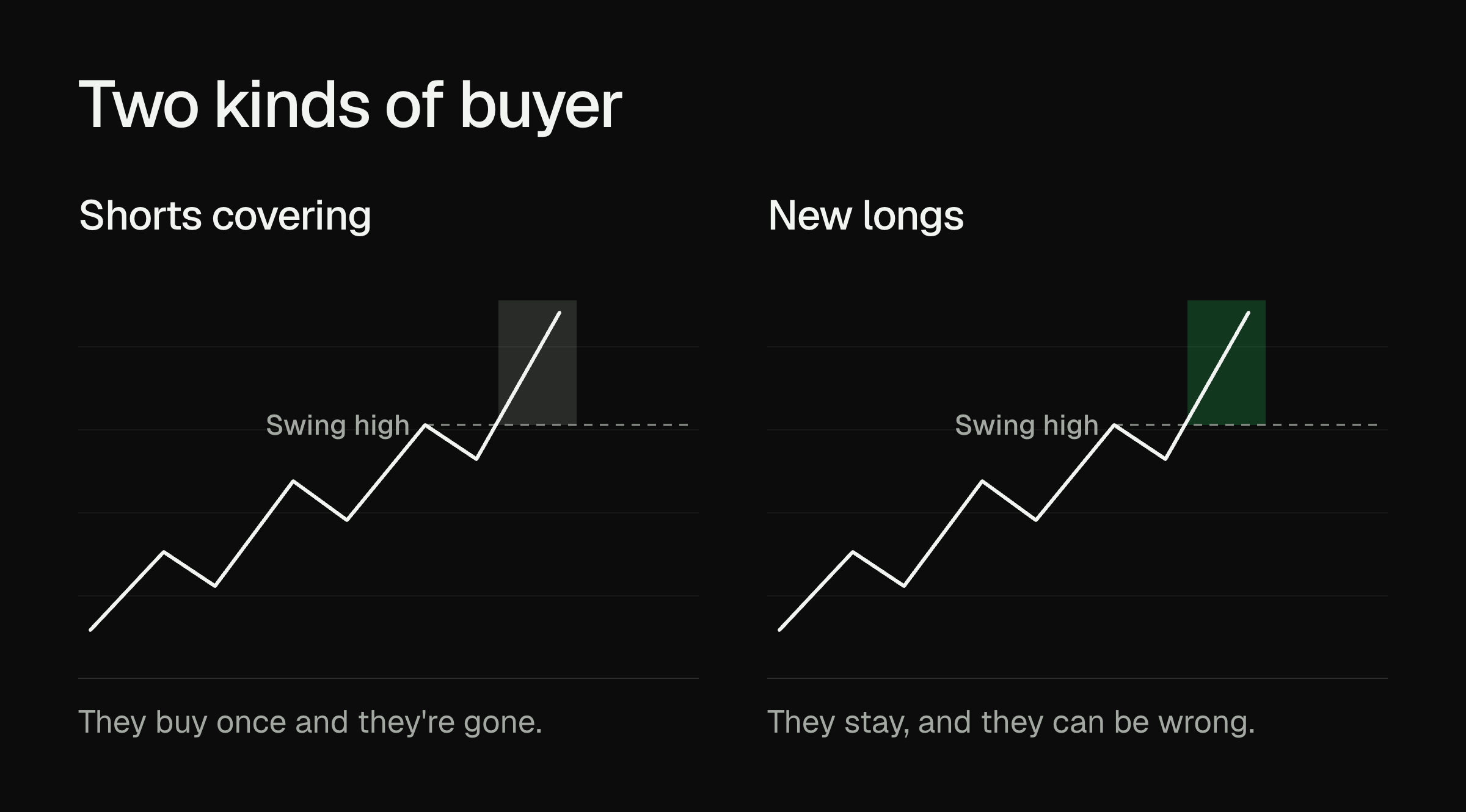
1. Two kinds of buyer at a new high
Shorts covering. They're closing a position. They buy once and they're gone.
New longs. They're opening one. They stay, and they have a price where they're wrong.
A high bought by shorts covering can run out of buyers. A high bought by new longs can run out of buyers and leave a crowd stuck at the top.
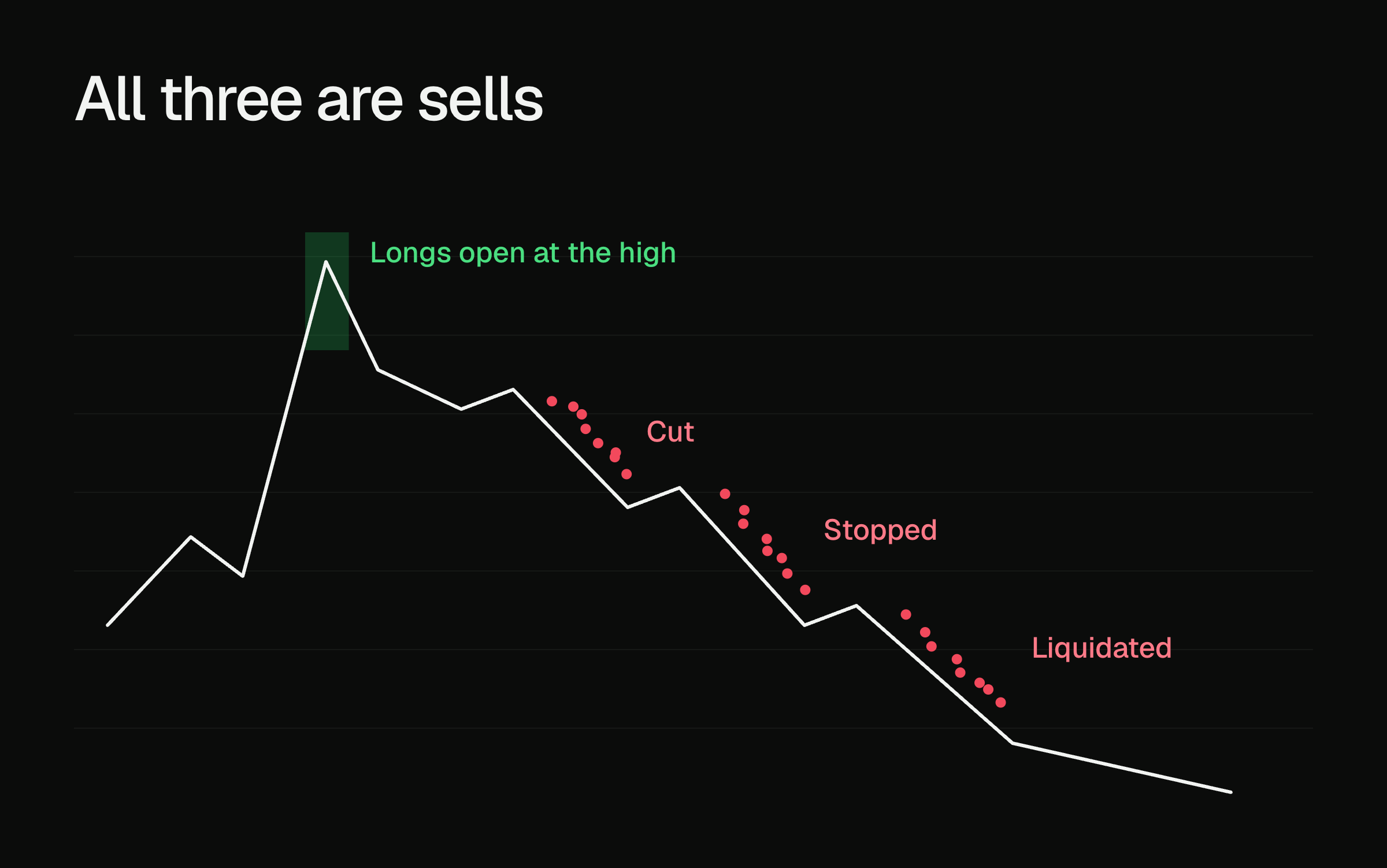
2. Why trapped longs fall
A long that opened at the high has no cushion.
If the bar closes back below where it bought, it's losing from the first bar. Some cut it. Some get stopped. Some get liquidated.
All three are sells, into the same move that trapped them.
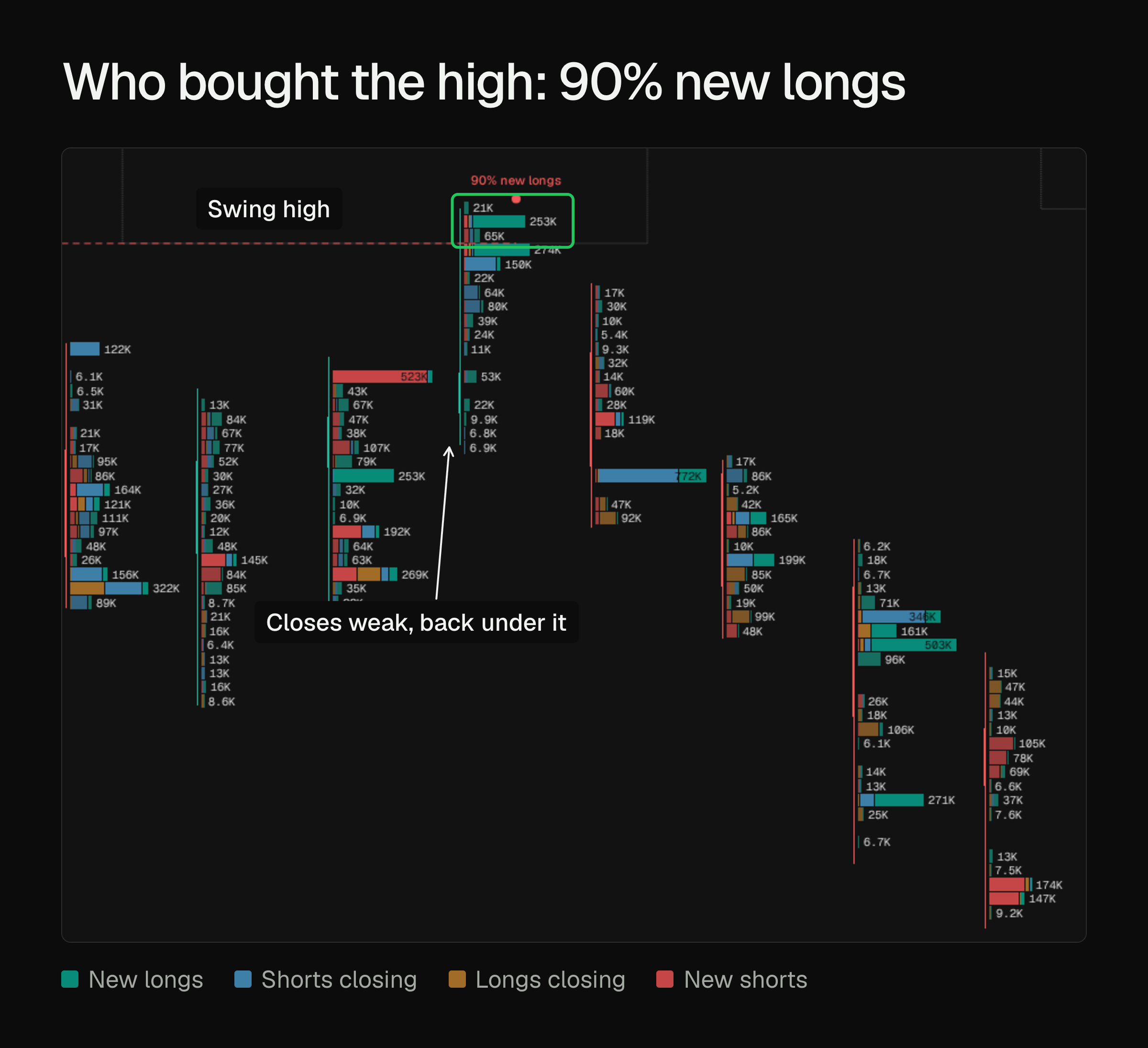
3. Who opened, who closed: every Hyperliquid fill says which
Most tools have to guess. Open interest went up and delta was positive, so it was probably new longs.
With 0xArchive you don't have to guess. 0xArchive matches every Hyperliquid trade, taker to maker, so every fill says whether it opened or closed a position.
The 0xArchive Terminal's footprint splits every bar into four: new longs, shorts closing, longs closing, new shorts. So "who bought the high" is a number you read straight off the bar.
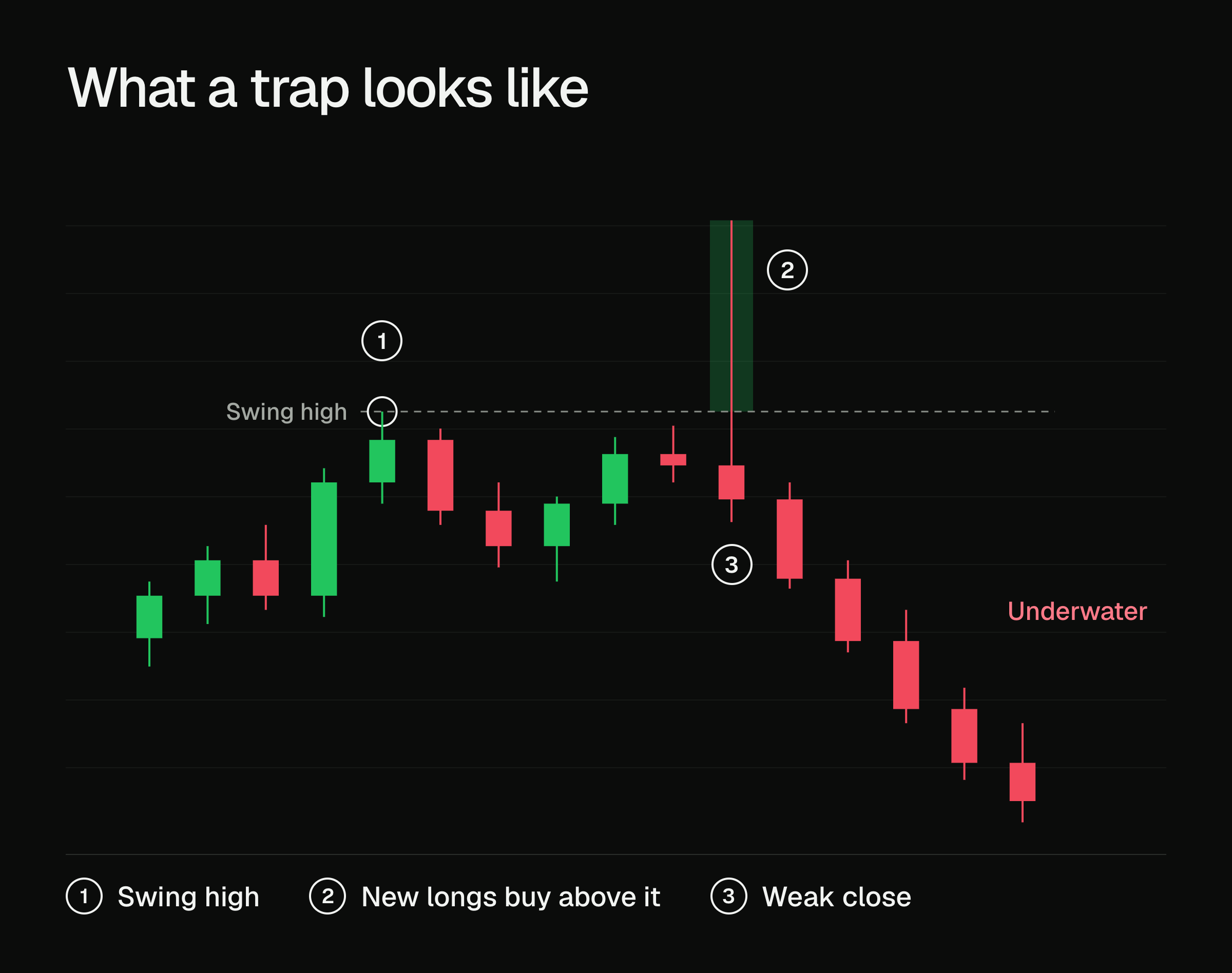
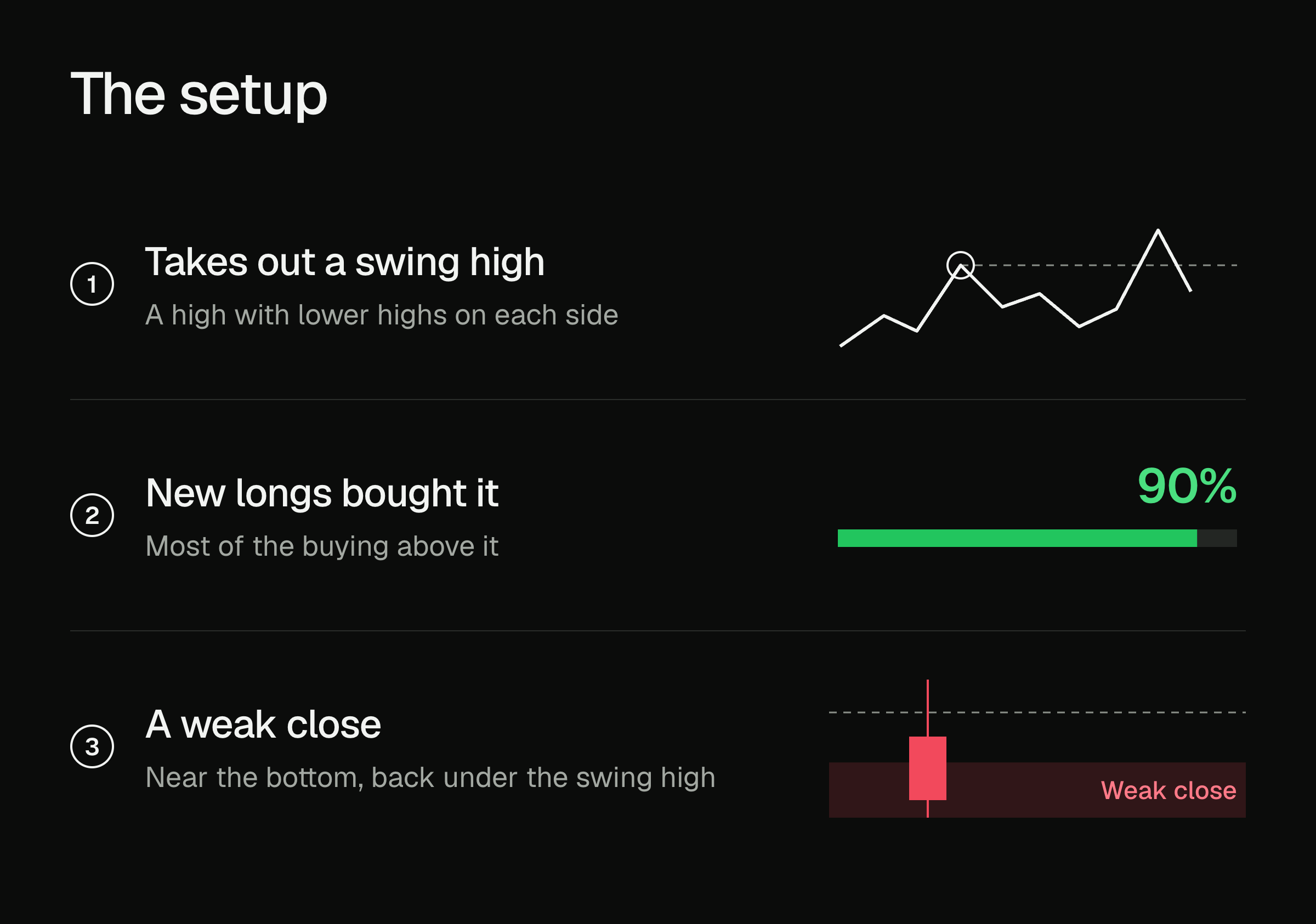
4. The setup: a swing high, new longs, a weak close
All three, on the same closed bar:
1. It takes out a swing high. A swing high is a high with lower highs on each side of it. The bar trades above a recent one. If it runs several, the highest counts.
2. New longs bought it. Most of the taker buying above that swing high opened new longs, not shorts covering.
3. A weak close. The bar closes near the bottom of its range, back under the swing high.
Swing highs are where the stops and the breakout orders sit. That's why the crowd shows up there.
5. The trade: short the close, stop above the trap bar's high
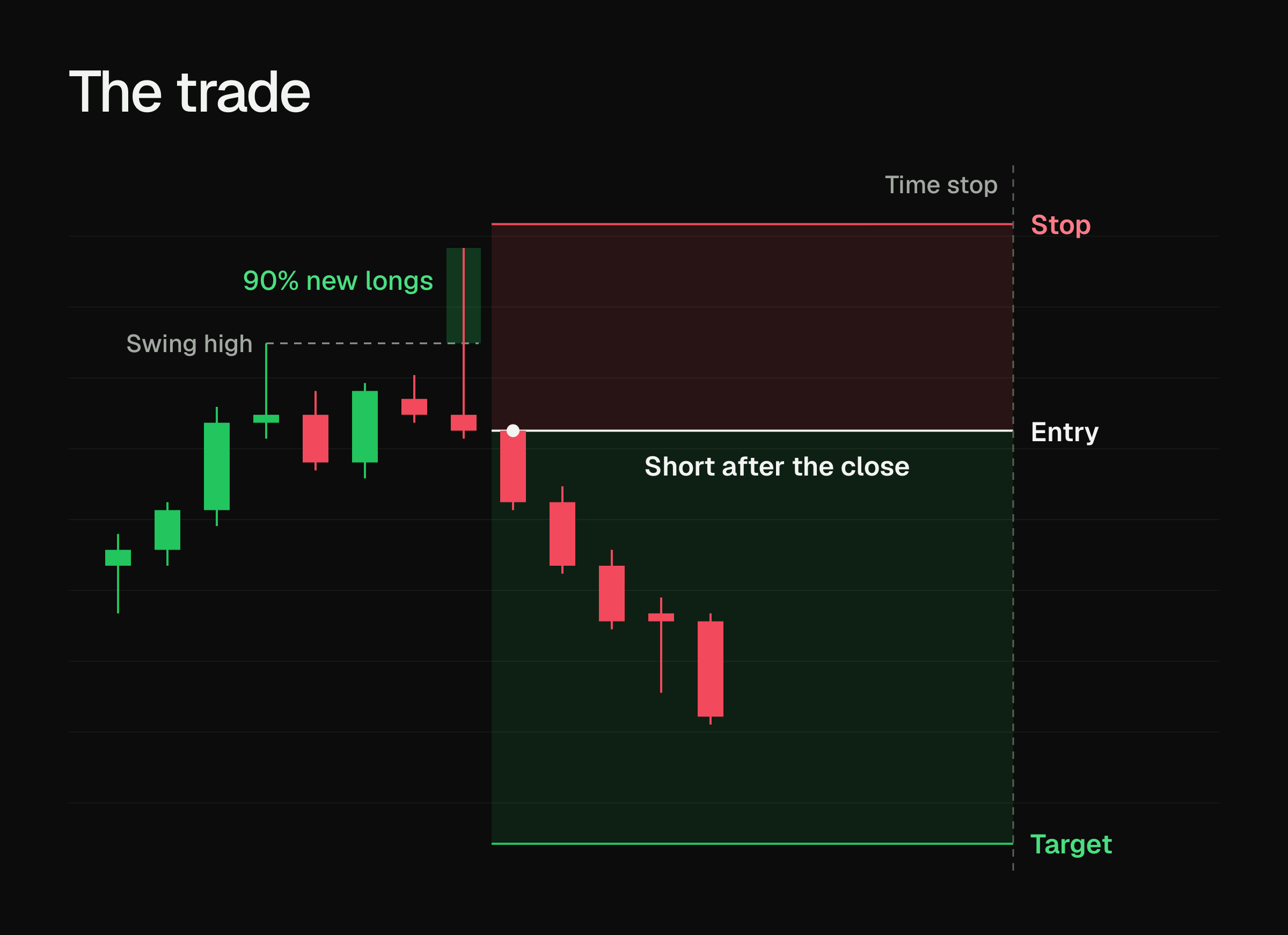
When all three line up, short the crowd that just bought the top.
Entry: short once the trap bar has closed.
Stop: above the trap bar's high, padded by a fraction of the ATR (average true range) so normal noise doesn't take you out. If that puts the stop too far away, skip the trade. If price takes the high back, the longs weren't trapped and the read was wrong.
Target: a fixed reward-to-risk (RR) multiple, set before you enter. The trapped longs cutting, getting stopped and getting liquidated is what moves price there.
Time stop: if the flush doesn't come within a set number of bars, get out. The trap didn't spring.
Risk: a small, fixed slice of the account per trade, a cap on trades per day, and a daily loss limit.
Look for it on liquid perps, where there's a crowd big enough to trap.
6. Let a script watch for trapped longs
You can read all of this off the footprint by hand. But it's three checks on every closed bar, and a script doesn't miss the one at 3am.
Most alert tools can't watch for this. They only see price and volume, and a candle can't tell a new long from a short covering. Scripts in the Terminal read every Hyperliquid fill, and every fill says whether it opened or closed.
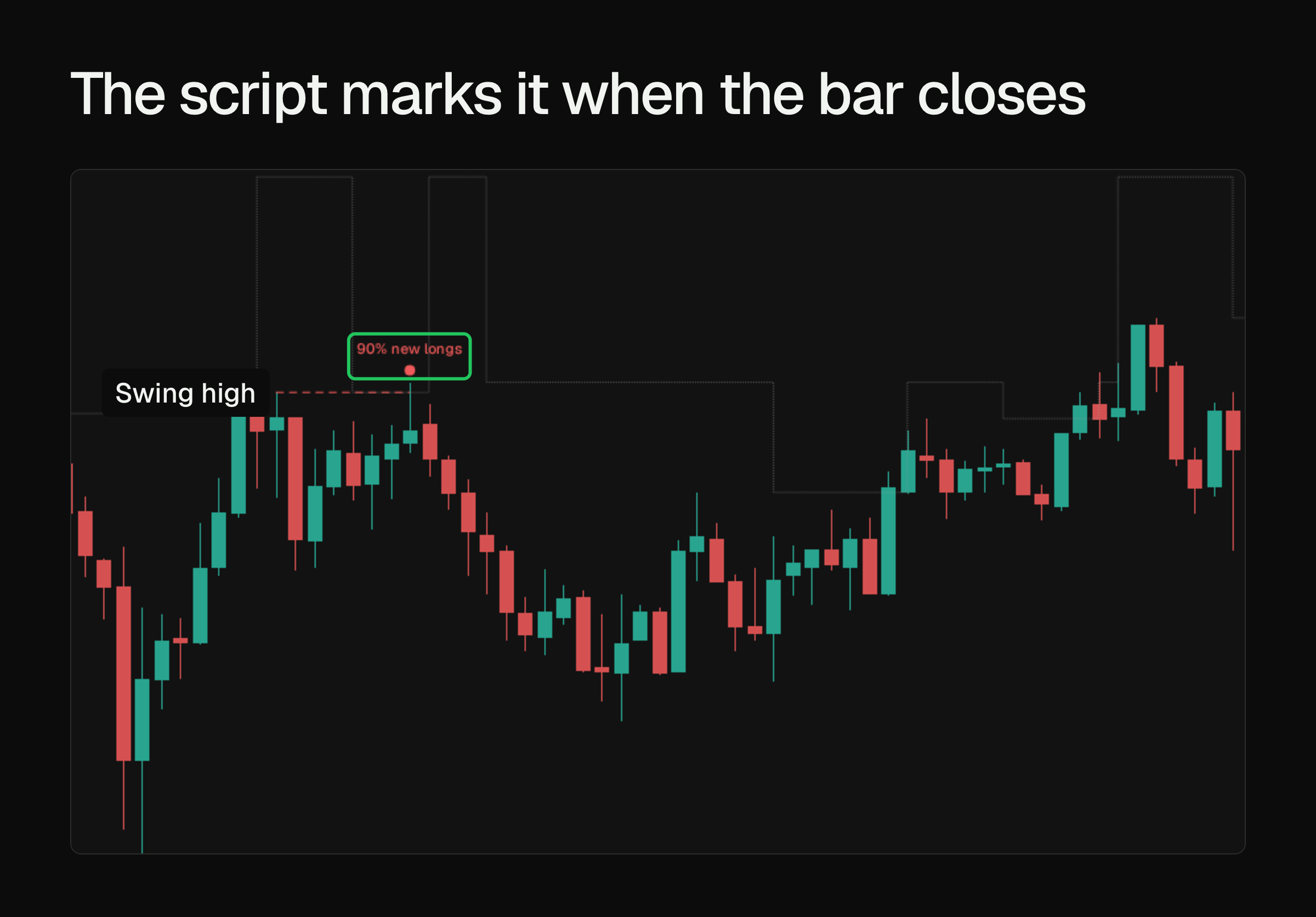
You write it as a script once. When a bar closes as a trap, the script labels it with the share of new longs and sends you an alert.
Then it's your call. The alert, the chart, the footprint and the order ticket are on the same screen, so you read the bar and take the trade on Hyperliquid without leaving the Terminal.
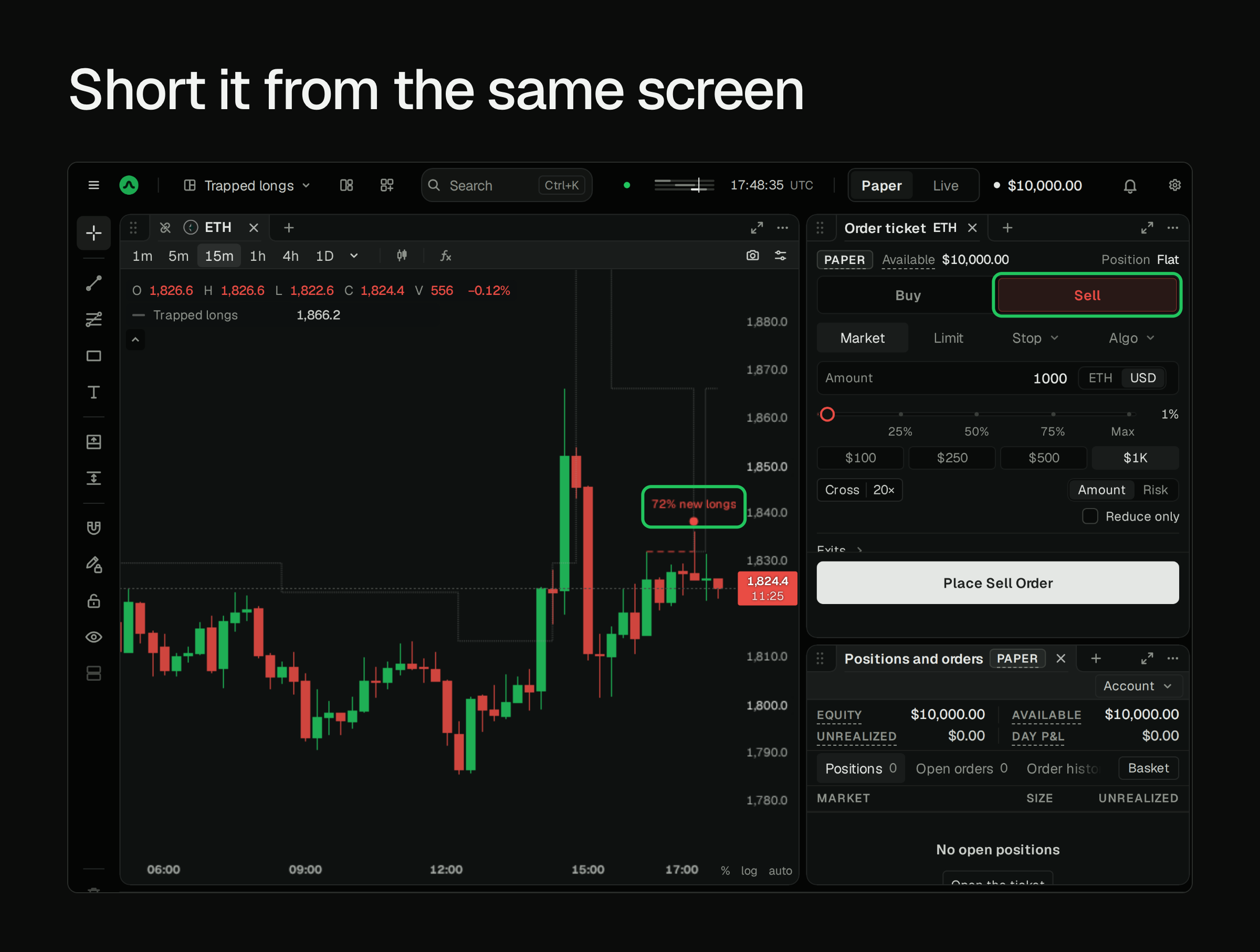
Practice it on Paper first. Paper orders fill against the live Hyperliquid book.
7. An agent can write the script for you
Paste this into Claude, ChatGPT or any agent, with the Terminal's scripting reference:
Write me a script for the 0xArchive Terminal that finds trapped longs on Hyperliquid and alerts me, so I can trade it myself. The idea: price runs a swing high (a pivot high), most of the buying above it is new longs opening (not shorts covering), and then the bar closes weak: near the bottom of its range, back under the swing high. Make the pivot length, the new-long share and the close level inputs I can set. Mark every one on my chart with the share of new longs on the label, and alert me when one closes.
Paste what comes back into the Terminal's editor and add it to your chart.
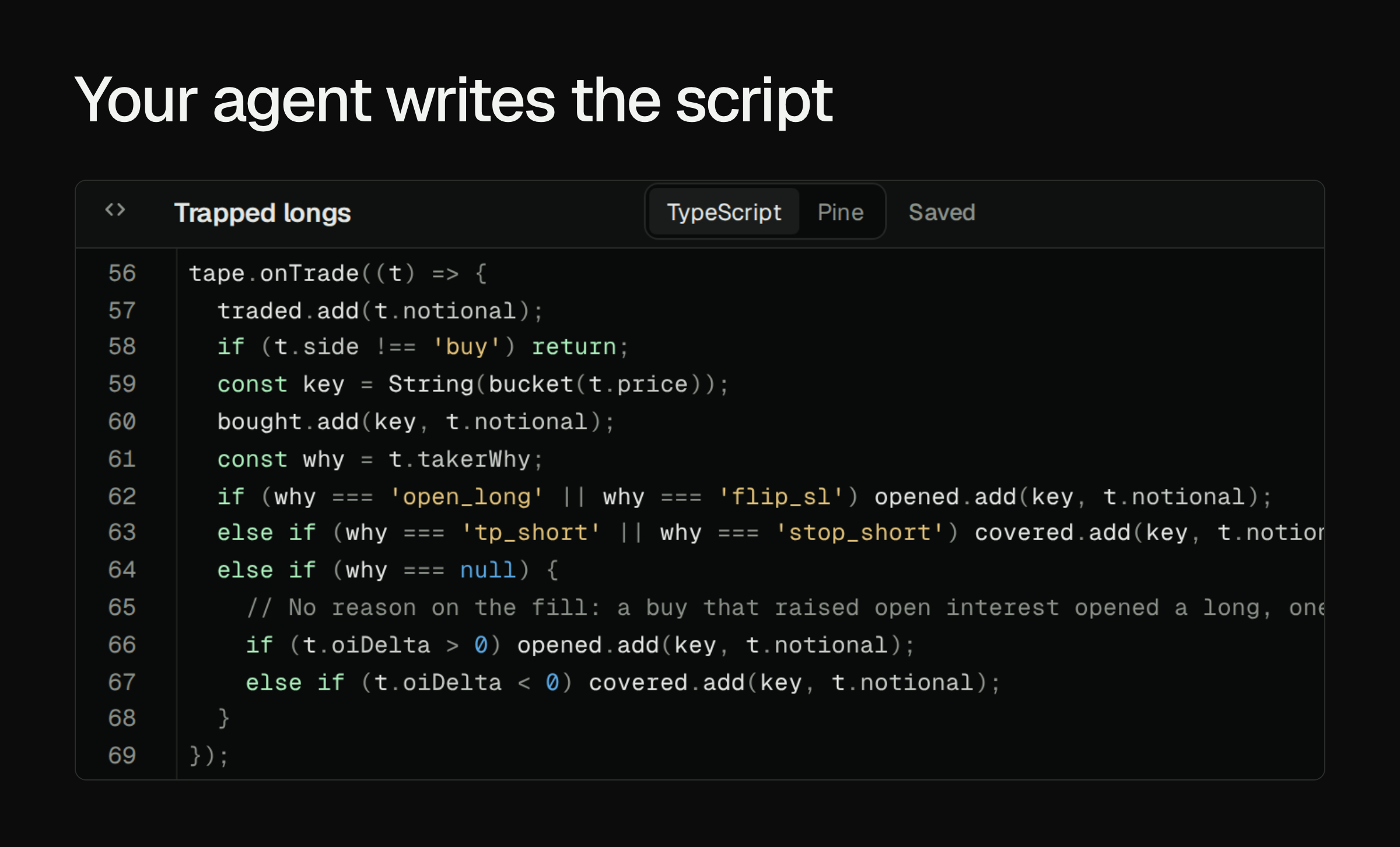
Trapped longs is one setup. Which one would you want a script watching for?
Trading on the Terminal costs 0.01% a trade on top of Hyperliquid's fee.
Common questions about trapped longs
What is a trapped long? A long opened near a new high on a bar that then closes back below where it bought. It is underwater from the first bar, and when it cuts, gets stopped or gets liquidated, it sells into the drop.
How do you tell new longs from shorts covering? Open interest and delta only let you guess. On Hyperliquid, 0xArchive matches every trade taker to maker, so each fill says whether it opened or closed a position, and the Terminal's footprint shows the split on every bar.
Where does the stop go on a trapped longs short? Above the trap bar's high, padded by a fraction of the ATR. If price takes that high back, the longs were not trapped.
Terminal references
Use the trapped traders example in the Terminal docs for a working script, and the scripting reference when an agent writes one for you.
For current API availability and plan details, use the Hyperliquid data API, data catalog, pricing, and status.